Currently, we are not accepting Medicaid, HMO or State Insurances


Why Your Toothbrush Can’t Remove Hardened Tartar Buildup

August 17, 2026
Dental Health
You brush twice a day. You floss regularly. Yet your dentist still finds buildup at your checkup. If this sounds familiar, you are not alone. Understanding why your toothbrush can’t remove hardened tartar buildup in Grand Blanc is key to protecting your smile. Tartar is not just stubborn plaque — it is a mineralized substance that bonds tightly to your enamel. No amount of brushing can break that bond once it forms.
What Is Tartar and How Does It Form?
Tartar starts as plaque — a soft, sticky film of bacteria that coats your teeth daily. When you brush and floss consistently, you remove most of this plaque before it causes harm. The problem begins when small amounts of plaque get missed. Over time, minerals from your saliva harden that leftover plaque into tartar, also called calculus.
This hardening process can begin in as little as 24 to 72 hours. Once tartar forms, it becomes a rigid, porous surface. That rough texture actually attracts more bacteria and makes future plaque buildup worse. It is a cycle that your toothbrush simply cannot interrupt once calculus is present.
Tartar most commonly forms along the gumline and between teeth. These are exactly the areas that are hardest to clean thoroughly at home. Even the most diligent brushers can develop tartar in these tight spots.
Why Your Toothbrush Can’t Remove Hardened Tartar Buildup in Grand Blanc
Your toothbrush bristles are designed to scrub soft plaque from smooth tooth surfaces. They work well for that purpose. However, hardened tartar has a completely different physical structure. It bonds chemically to enamel and cannot be loosened by brushing alone.
Think of it like dried concrete on a surface. A damp cloth can clean up fresh cement easily. But once it hardens, you need a specialized tool to chip it away safely. The same logic applies to tartar on your teeth.
Electric toothbrushes are more effective than manual ones at plaque removal. But even the best electric brush cannot break apart calcified tartar deposits. Whitening toothpastes and charcoal toothpastes make similar claims — but none are clinically proven to remove hardened tartar safely at home. Attempting to scrape tartar yourself can damage your enamel and irritate your gums.
What a Professional Cleaning Actually Removes
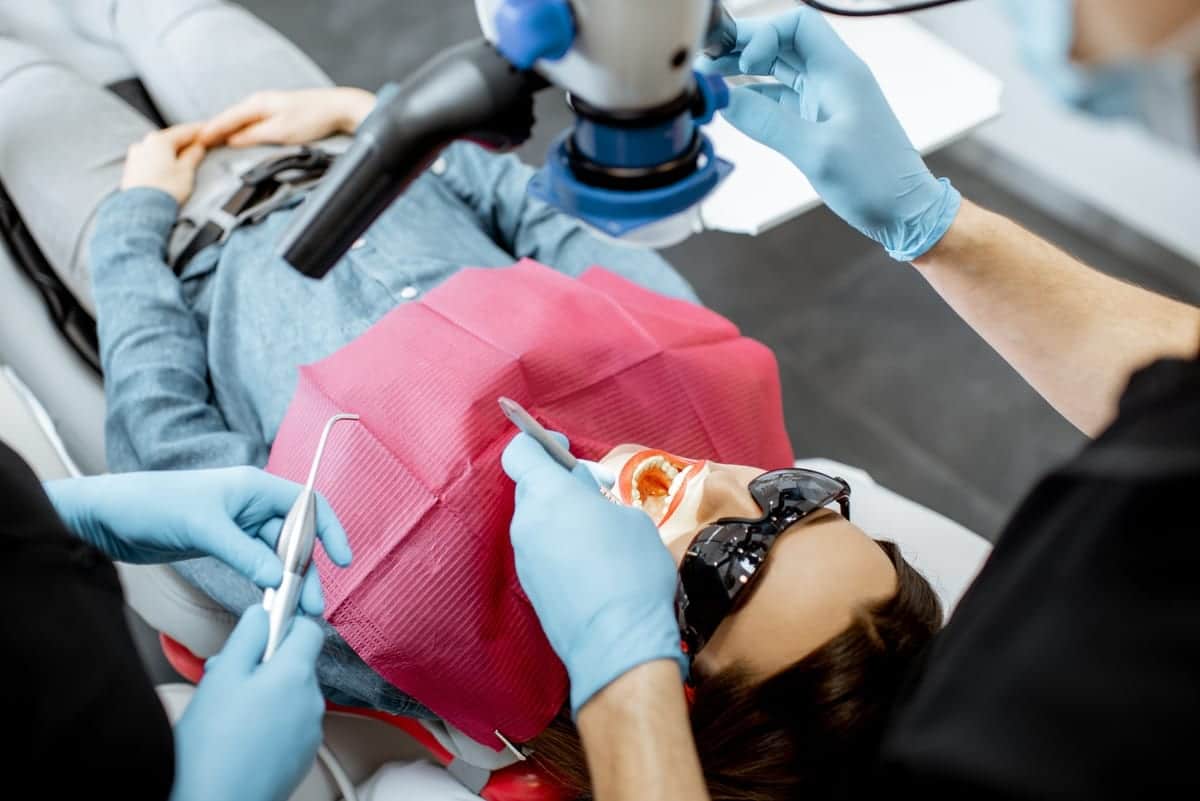
A professional teeth cleaning at Drs Burau Cosmetic and Family Dentistry goes far beyond what your daily routine can achieve. Our hygienists use specialized instruments called scalers and ultrasonic devices. These tools safely break up and lift tartar deposits from your teeth and below the gumline.
Here is what a professional cleaning removes that home care cannot:
- Supragingival tartar — buildup above the gumline that is visible and staining
- Subgingival tartar — deposits below the gumline that cause gum inflammation
- Stubborn surface stains from coffee, tea, and food pigments
- Bacteria living in tartar pockets that contribute to bad breath
- Early signs of decay that develop under calculus deposits
After scaling, your hygienist polishes your teeth with a gritty paste. This smooths the enamel surface, making it harder for new plaque to stick. The entire process leaves your mouth significantly cleaner than any home routine can achieve alone.
If significant tartar has formed below the gumline, a deeper cleaning called scaling and root planing may be recommended. This targets the roots of teeth to remove bacteria and smooth root surfaces. Addressing this early helps prevent more serious conditions that could eventually require Root Canals Treatment Grand Blanc patients want to avoid.
The Health Risks of Letting Tartar Go Untreated
Tartar is not just a cosmetic concern. Leaving it untreated creates real health risks for your teeth and gums. The bacteria trapped in tartar produce acids that erode enamel and cause cavities. They also release toxins that inflame gum tissue and trigger gingivitis.
Gingivitis is the earliest stage of gum disease. If it progresses, it becomes periodontitis — a serious infection that can destroy the bone supporting your teeth. Tooth loss is a real consequence of advanced gum disease. Regular cleanings interrupt this cycle before it escalates.
Tartar buildup has also been linked to broader health concerns. Research connects chronic oral bacteria to cardiovascular disease and systemic inflammation. Your oral health and your overall health are deeply connected. Prioritizing professional cleanings is an investment in your whole body, not just your smile.
How Often Should Grand Blanc Patients Get a Professional Cleaning?
Most patients benefit from a professional cleaning every six months. This schedule keeps tartar from accumulating to dangerous levels. However, some patients need more frequent visits depending on their individual risk factors.
You may benefit from more frequent cleanings if you:
- Have a history of gum disease or periodontitis
- Are a smoker or use tobacco products
- Have diabetes or other systemic health conditions
- Wear braces, bridges, or other dental appliances
- Produce heavier-than-average tartar due to saliva chemistry
Dr. Alex Burau and our team will evaluate your specific situation and recommend the right cleaning schedule for you. There is no one-size-fits-all answer. Personalized care makes all the difference in long-term oral health outcomes.
If tartar has already affected the appearance of your teeth, professional cleanings can often be combined with cosmetic treatments. Patients interested in Cosmetic Dentistry Grand Blanc options will find that a clean, healthy foundation always produces the best aesthetic results.
What to Expect at Your Cleaning Appointment
Many patients feel anxious about dental cleanings, especially if it has been a while since their last visit. At Drs Burau Cosmetic and Family Dentistry in Grand Blanc, we make every appointment as comfortable as possible. Our team explains each step so you always know what is happening.
A typical cleaning appointment includes a review of your oral health history, a full examination, tartar and plaque removal, polishing, and a fluoride treatment if appropriate. The entire process usually takes 45 to 60 minutes. Most patients leave feeling refreshed and more confident in their smile.
If it has been more than a year since your last cleaning, do not let that stop you from coming in. We are here to help — not to judge. Getting back on a regular schedule is the most important step you can take right now.
Your smile deserves professional care that your toothbrush simply cannot provide. Schedule your cleaning with Dr. Alex Burau and our friendly team today. Book Now to schedule your appointment with our team.
Frequently Asked Questions
Can tartar go away on its own without a dental cleaning?
No. Once plaque hardens into tartar, it cannot be removed through brushing, flossing, or any home remedy. Tartar bonds firmly to enamel and requires professional instruments to safely remove it. Only a dental hygienist or dentist can clear tartar deposits without damaging your teeth.
How long does it take for plaque to turn into tartar?
Plaque can begin hardening into tartar in as little as 24 to 72 hours if it is not removed. This is why consistent daily brushing and flossing are so important. Once tartar forms, professional cleaning is the only effective solution.
Is tartar buildup a sign of poor oral hygiene?
Not necessarily. Even people with excellent oral hygiene habits can develop tartar. Some people naturally produce more mineralized saliva, which speeds up tartar formation. Genetics, diet, and other health factors all play a role. Regular professional cleanings help manage buildup regardless of your home routine.
Can tartar buildup cause tooth pain?
Tartar itself does not typically cause direct pain. However, the gum inflammation and decay it promotes can lead to sensitivity and discomfort. If tartar extends below the gumline and causes periodontitis, patients may experience gum tenderness, bleeding, and eventually tooth pain as the condition worsens.
What is the difference between plaque and tartar?
Plaque is a soft, sticky film of bacteria that forms on teeth daily. It can be removed with regular brushing and flossing. Tartar is what happens when plaque is not fully removed and mineralizes over time. Tartar is hard, firmly attached to the tooth surface, and requires professional tools to eliminate safely.
Recent Post
August 17, 2026
Why Your Toothbrush Can’t Remove Hardened Tartar Buildup
August 10, 2026
Does a Root Canal Really Hurt? What Modern Anesthesia Actually Does

August 3, 2026
Broken Tooth Emergency: What to Do Before Your Appointment

July 27, 2026
Veneers vs Bonding vs Whitening in Grand Blanc, MI
July 20, 2026
Teeth Cleanings Every 3 Months in Grand Blanc, MI
Categories
Dental Health (32)