Currently, we are not accepting Medicaid, HMO or State Insurances


Root Canal Treatment in Grand Blanc, MI
June 15, 2026
Dental Health
Your tooth has been bothering you for a while now. Maybe it aches at night. Maybe it stings when you sip something cold. If you’ve been wondering whether your tooth is telling you it needs a root canal in Grand Blanc, you’re not alone. Many patients ignore early warning signs and hope the pain just goes away. Unfortunately, dental infections rarely resolve on their own — and waiting almost always makes things worse.
At Drs Burau Cosmetic and Family Dentistry, Dr. Alex Burau helps Grand Blanc patients understand what their teeth are trying to tell them. This article walks you through the key symptoms, the risks of delaying care, and what the treatment process actually looks like.
What Is a Root Canal and Why Would You Need One?
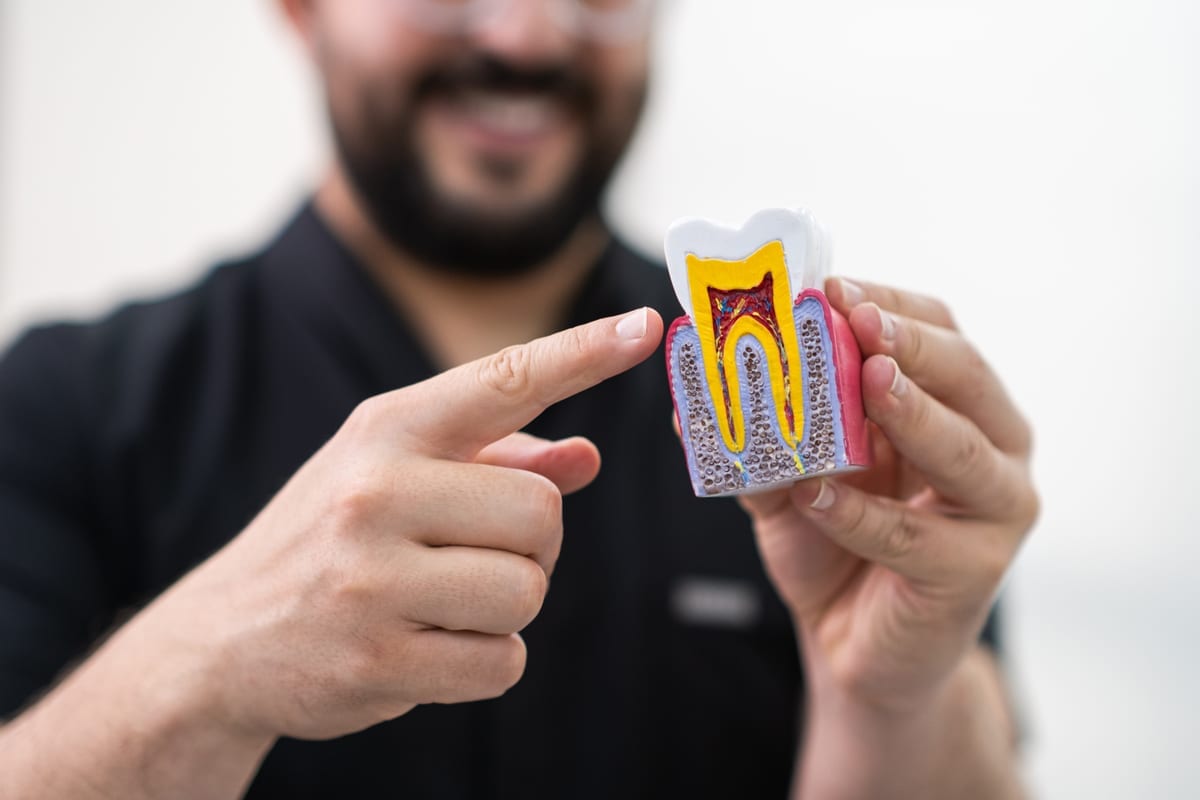
A root canal is a procedure that removes infected or damaged tissue from inside your tooth. Each tooth contains a soft inner layer called the pulp. This pulp holds nerves and blood vessels. When bacteria reach the pulp — through a crack, deep cavity, or injury — an infection develops.
The infection doesn’t stay contained. It spreads through the root and into the surrounding bone. That’s when real problems begin. A Root Canals Treatment stops the infection, saves the natural tooth, and eliminates the pain at its source. Most patients are surprised by how manageable the procedure actually is.
Signs Your Tooth in Grand Blanc Is Telling You Something Is Wrong
Your body sends clear signals when a tooth needs attention. Recognizing those signals early gives you the best chance at a straightforward treatment outcome. Here are the most common warning signs that a root canal may be needed:
- Persistent or throbbing toothache — Pain that lingers or worsens without a clear cause
- Sensitivity to hot or cold — Discomfort that stays long after the temperature source is removed
- Darkening of the tooth — A tooth that turns gray or brown may have dying pulp tissue
- Swelling near the tooth — Puffy gums, a bump, or facial swelling near the affected area
- Tenderness when biting — Pressure or chewing that causes sharp or dull pain
- A persistent pimple on the gums — This is often a fistula, a sign of abscess drainage
Not every symptom appears at once. Some patients experience only mild sensitivity for months before the pain intensifies. Others feel sudden, severe pain with no prior warning. Either way, these signs deserve prompt professional attention.
Why Waiting Makes the Infection and Outcome Worse
Dental infections do not follow a wait-and-see approach well. Without treatment, the bacteria causing the infection continue to multiply. The infection spreads deeper into the root and surrounding bone tissue. What starts as a manageable root canal can escalate into a dental abscess or bone loss.
In some cases, a severely infected tooth cannot be saved at all. Extraction becomes the only remaining option. That leads to additional procedures and costs you could have avoided with earlier care. Tooth loss also affects your bite, jawbone health, and confidence over time.
Beyond the tooth itself, untreated oral infections can affect your overall health. Research has linked chronic oral infections to cardiovascular and systemic health concerns. Acting quickly protects far more than just one tooth. If your tooth is telling you something is wrong, listening sooner is always the better choice.
What to Expect During Root Canal Treatment at Our Grand Blanc Office
Many patients delay care because they fear the procedure itself. The reality is that modern root canal treatment is comfortable and efficient. Dr. Alex Burau uses gentle techniques and effective local anesthesia so you feel as little discomfort as possible throughout the appointment.
Here is a simple breakdown of what the process involves:
- Examination and X-rays — Dr. Burau assesses the extent of infection and creates a treatment plan
- Anesthesia — The area is fully numbed before any work begins
- Pulp removal — Infected tissue is carefully removed from inside the tooth
- Cleaning and shaping — The root canals are cleaned, shaped, and disinfected
- Sealing — The tooth is sealed to prevent reinfection
- Restoration — A crown is often placed to protect and restore the tooth’s function
Most patients return to normal activities within a day or two. Mild soreness after the procedure is common and manageable with over-the-counter relief. The results — a pain-free, fully functional tooth — are well worth it.
How Root Canal Treatment Connects to Your Long-Term Dental Health
Saving a natural tooth is always the preferred outcome. Your natural teeth support the structure of your jaw and the alignment of surrounding teeth. When a tooth is lost, neighboring teeth can shift, affecting your bite and your appearance. Root canal treatment helps you avoid that domino effect.
Maintaining healthy teeth also supports your confidence and your smile. At Drs Burau Cosmetic and Family Dentistry, we believe dental health and aesthetics go hand in hand. We also offer Cosmetic Dentistry services to help Grand Blanc patients look and feel their best after their oral health is restored.
Routine preventive care plays a major role here too. Regular teeth cleanings allow Dr. Burau to catch problems early — before they reach the point of needing emergency care. The more proactive you are about your dental health, the better your long-term outcomes will be.
Don’t Ignore What Your Tooth Is Telling You
Pain, sensitivity, swelling, and discoloration are your tooth’s way of asking for help. Ignoring those signals doesn’t make the problem go away. It gives the infection more time to spread and more damage to cause. The sooner you seek care, the better your chances of a smooth, successful outcome.
Dr. Alex Burau and the team at Drs Burau Cosmetic and Family Dentistry are here to help Grand Blanc patients get relief and get back to their lives. You don’t have to keep living with tooth pain. Book Now to schedule your appointment with our team.
Frequently Asked Questions
How do I know if I need a root canal or just a filling?
A filling treats surface-level decay that hasn’t reached the inner pulp. A root canal is needed when the infection or damage has reached the pulp tissue inside the tooth. Signs like prolonged sensitivity, spontaneous pain, swelling, or a darkened tooth suggest the pulp may be affected. Dr. Burau can assess this with an examination and X-rays to determine the right treatment.
Is a root canal painful?
Most patients find root canal treatment no more uncomfortable than getting a filling. The area is fully numbed before any work begins. You may feel mild soreness for a day or two after the procedure, but the intense tooth pain that brought you in will be gone. Modern techniques have made this treatment much more comfortable than its reputation suggests.
What happens if I don’t get a root canal when I need one?
Without treatment, the infection inside the tooth will continue to spread. It can move into the surrounding bone and tissue, causing an abscess. Over time, the tooth may become unsavable, making extraction the only option. Untreated dental infections can also pose broader health risks. Prompt treatment saves both the tooth and prevents further complications.
How long does a root canal take in Grand Blanc?
Most root canal procedures are completed in one to two appointments at our Grand Blanc office. The length depends on the tooth’s location, the number of root canals involved, and the severity of the infection. Dr. Burau will give you a clear timeline during your consultation so you know exactly what to expect.
Can a tooth that had a root canal get infected again?
It is possible but uncommon. A properly sealed and restored tooth has a very low risk of reinfection. Placing a crown after the procedure adds an extra layer of protection. Maintaining regular cleanings and checkups significantly reduces any long-term risk of complications.
Recent Post

August 3, 2026
Broken Tooth Emergency: What to Do Before Your Appointment

July 27, 2026
Veneers vs Bonding vs Whitening in Grand Blanc, MI
July 20, 2026
Teeth Cleanings Every 3 Months in Grand Blanc, MI
July 13, 2026
Root Canal Treatment in Grand Blanc, MI

July 6, 2026
Emergency Tooth Pain Care in Grand Blanc, MI
Categories
Dental Health (30)