Currently, we are not accepting Medicaid, HMO or State Insurances


Decoding Dental X-rays: Uncovering the Benefits and Importance of this Vital Diagnostic Tool
February 10, 2023
Dental X-ray
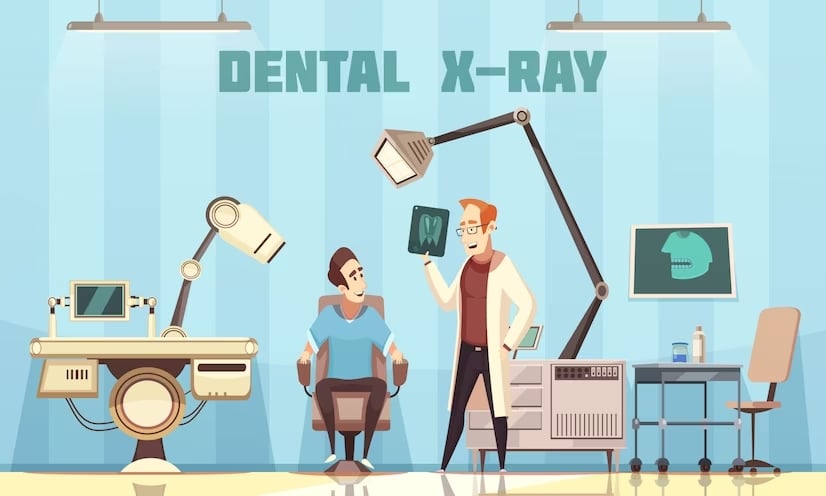
Dental X-rays are a vital diagnostic tool in modern dentistry that provides a wealth of information about your oral health. These images allow dentists to detect problems that are not visible to the naked eye, such as cavities, gum disease, and other underlying conditions that may be affecting your teeth and gums. In this article, we’ll take a closer look at what dental X-rays are, how they are used, and the many benefits they offer.
What are Dental X-rays?
Dental X-rays are radiographic images that are taken of your teeth and surrounding tissues. They are produced using a small amount of ionizing radiation, which is passed through your mouth and captured by a special sensor or film. This process generates detailed images that can be used to assess the health of your teeth, gums, and jawbone.
There are several types of dental X-rays, including bitewing X-rays, periapical X-rays, and panoramic X-rays. Bitewing X-rays are used to detect cavities and other problems between your teeth, while periapical X-rays provide a full view of a single tooth, from the crown to the roots. Panoramic X-rays are a type of full-mouth X-ray that provides a broad view of your entire mouth, including your jawbone, teeth, sinuses, and other surrounding structures.
How are Dental X-rays used?
Dental X-rays are used to help dentists diagnose a wide range of oral health problems. They are especially useful for detecting cavities and gum disease, as well as identifying impacted teeth, abscesses, cysts, and tumors. Additionally, X-rays can also help dentists evaluate the health of your jawbone and determine the best course of treatment for conditions such as TMJ disorder and osteoporosis.
Dental X-rays are typically taken on an as-needed basis, depending on your oral health and the conditions that your dentist is trying to diagnose. For example, you may need X-rays if you are experiencing pain or discomfort in a particular tooth, or if you have a history of cavities or gum disease. Your dentist may also recommend X-rays as part of a routine dental exam to assess the overall health of your mouth and to detect any potential problems before they become more serious.
The Benefits of Dental X-rays
Dental X-rays offer a number of important benefits to patients. Some of the key benefits of X-rays include:
- Early detection of oral health problems: X-rays allow dentists to detect problems in their early stages, when they are most treatable. For example, X-rays can detect cavities before they become larger and more painful, and can help identify gum disease before it becomes more advanced.
- More accurate diagnoses: X-rays provide detailed images of your teeth, gums, and surrounding tissues, which can help dentists make more accurate diagnoses and recommend the best course of treatment.
- Improved treatment planning: By using X-rays, dentists can gain a better understanding of your oral health and develop more effective treatment plans that are tailored to your specific needs.
- Reduced risk of complications: X-rays can help prevent complications by allowing dentists to detect problems early and take action to correct them before they become more serious.
- Increased patient comfort: X-rays are a non-invasive diagnostic tool that can be completed quickly and easily, with minimal discomfort to the patient.
- Better overall oral health: By using X-rays to detect and treat oral health problems early,
Recent Post

September 14, 2026
Root Canal vs Extraction: Which Option Saves You More Money Long-Term

September 7, 2026
Tooth Extraction Pain at 2 AM: Your Real Options This Weekend

August 24, 2026
Your Cosmetic Dentistry Results: How Long They Actually Last

August 17, 2026
Why Your Toothbrush Can’t Remove Hardened Tartar Buildup

August 10, 2026
Does a Root Canal Really Hurt? What Modern Anesthesia Actually Does
Categories
Dental X-ray (3)